The 2026 passport index released by Nomad Capitalist reveals that global citizenship is no longer limited to the number of countries accessible visa-free. Instead, it is shaped by tax regulations, personal freedoms, and investment potential. Unlike traditional indices, this analysis goes beyond the mobility provided by a travel document, examining how strategic a passport is for investors and high-net-worth individuals.
The 2026 evaluation method of the index employs a complex scoring system for the citizenship of 199 countries. The analysis process assigns a 50% weight to visa-free travel opportunities, while balancing the remaining scoring on citizenship taxation policies, personal freedom levels, ease of dual citizenship, and the country’s international reputation. This approach targets not only tourists but also entrepreneurs and digital nomads operating on a global scale, placing the impact of citizenship on financial and social freedoms into a mathematical framework.
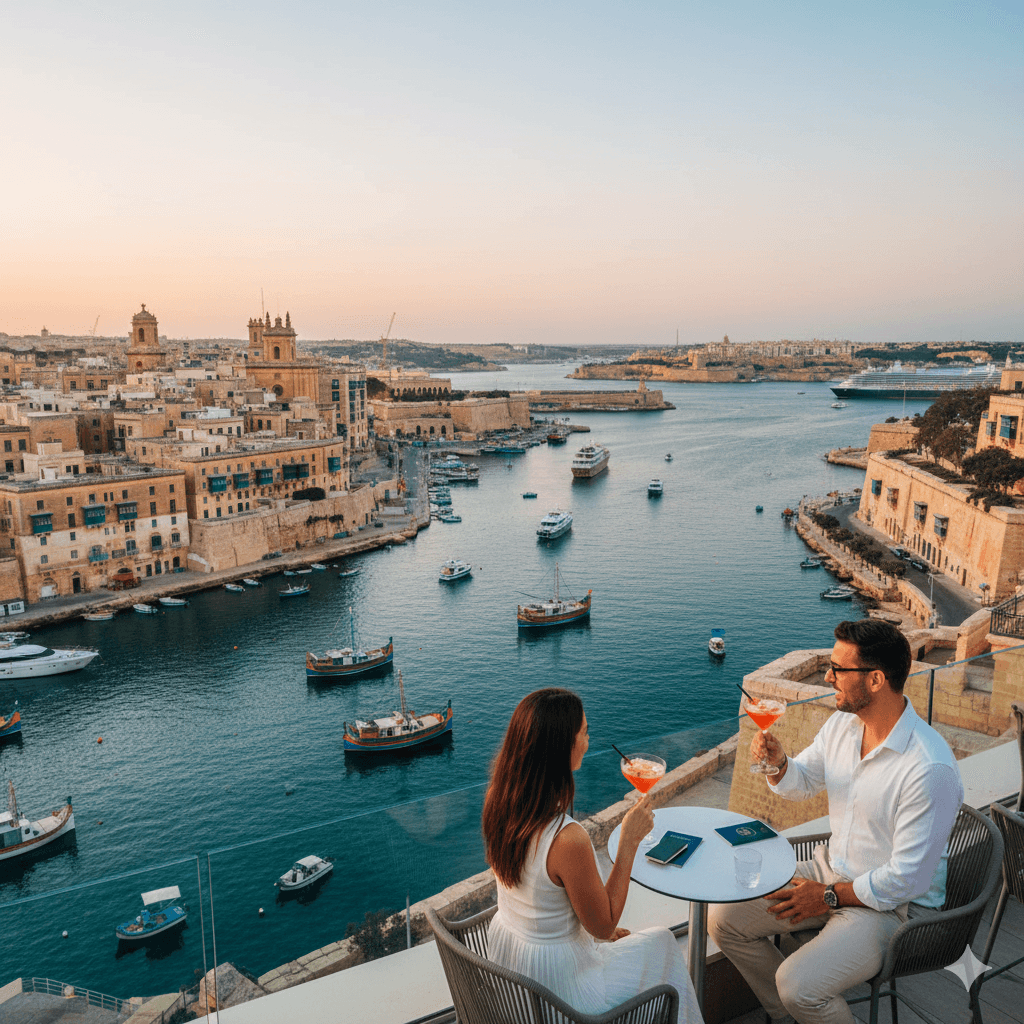
The 2026 data indicates a significant shift in how global citizens view their passports. Traditionally, mobility was measured solely by the number of countries accessible without a visa. However, the rise of remote work and global economic volatility has transformed the passport into a strategic asset. High-net-worth individuals are increasingly prioritizing “second citizenship” options that provide tax residency benefits alongside travel freedom. As governments in Europe continue to tighten their immigration policies, countries like Malta and Romania are successfully positioning themselves as hubs for both international capital and high-end tourism.
Nomad Passport Index 2026: Top 10 Passports
- Malta – Maintains its top position by combining European Union mobility with an advantageous tax regime for non-domiciled individuals.
- Greece – Has risen to the top ranks thanks to its expanding diplomatic network and tax incentives offered to investors in recent years.
- Ireland – Serves as a safe haven for investors, offering not only the travel freedom brought by EU membership but also high personal freedom scores.
- Romania – Has entered the top five by becoming a competitive financial center in the EU market with low corporate and personal income tax rates at the 10% level.
- Cyprus – Continues its stable position with investment-focused citizenship programs and the strategic advantages provided by European Union citizenship.
- Bulgaria – A rising Central/Eastern European powerhouse offering EU mobility, a flat 10% income tax, permissive dual citizenship rules, and improving infrastructure at a fraction of Western European costs.
- Czech Republic – A consistently strong EU passport with high governance scores, full Schengen mobility, liberal dual citizenship, and stable, well‑run institutions that make it increasingly attractive.
- Italy – Returns to the top tier with its lump‑sum tax regime for HNWIs, EU mobility, liberal dual citizenship, and world‑class lifestyle, despite a more complex bureaucracy.
- New Zealand – Holds its position with strong freedom scores, excellent global perception, high quality of life, and stable governance, offering a reliable English‑speaking base in the Asia‑Pacific region.
- Hungary – Completes the top ten with a flat 15% income tax, EU membership, dual citizenship recognition, and competitive costs, despite political concerns limiting further ascent.
United Arab Emirates — Tax‑free environment, strong global reputation, high personal freedom for residents, and rapidly expanding mobility options.
Editor’s Note
The 2026 Nomad Passport Index shows that a passport’s real power now extends far beyond visa‑free travel. Malta’s continued leadership at No. 1 proves this shift: its EU mobility, non‑dom tax regime, and flexible citizenship rules make it a strategic financial asset rather than a simple travel document. Across the broader rankings, the rise of Central and Eastern Europe highlights a global move toward lower taxes, simpler residency rules, and greater personal freedom. In 2026, the true value of a passport lies in how effectively it protects mobility, financial autonomy, and long‑term global optionality.
Reference: Original reporting by Nomad Capitalist
Curated by Latest Travel News for global travel enthusiasts.
Related Stories: